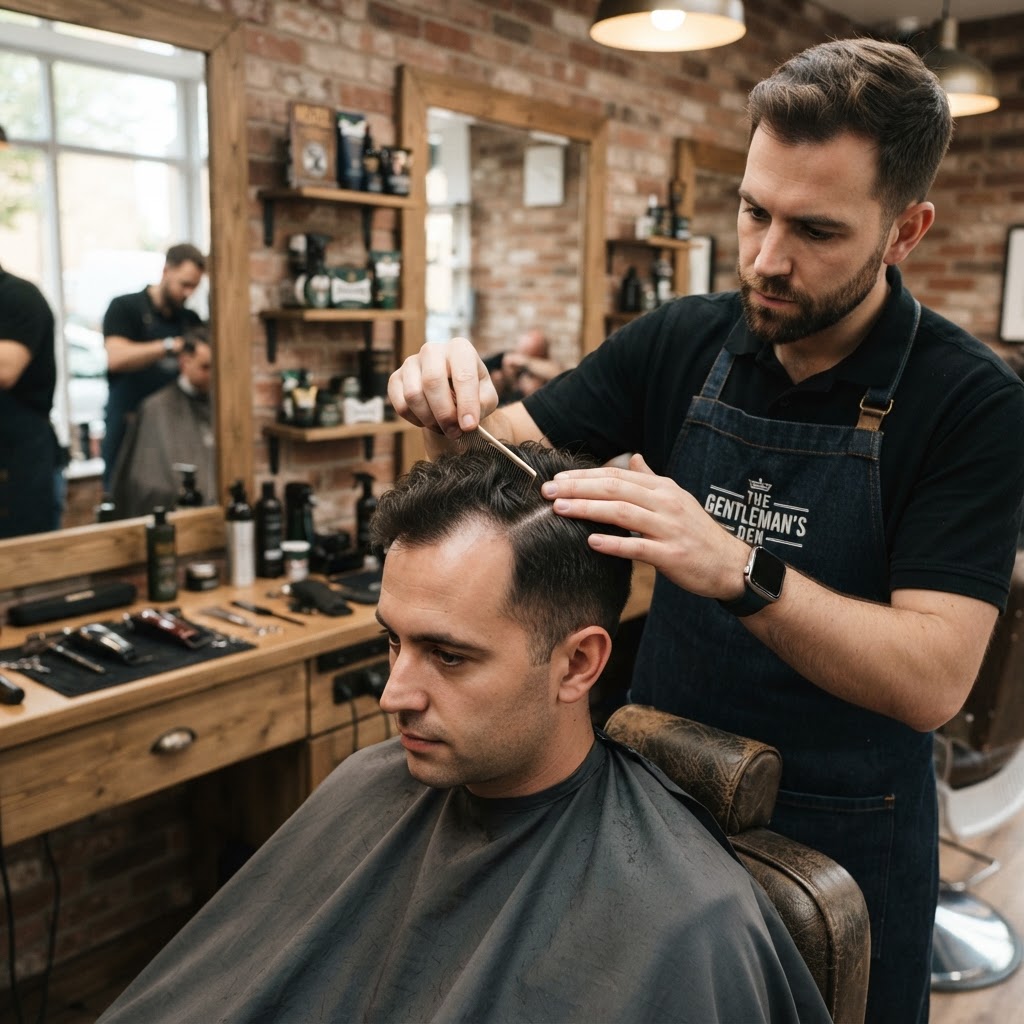
Every day, barbers and stylists come into close contact with dozens of scalps. You're the first line of defence when it comes to spotting issues that clients may not even know they have. Understanding scalp health isn't about diagnosing medical conditions — it's about recognising when something looks unusual, knowing when to adjust your technique, and advising clients to seek professional help when needed.
A healthy scalp is the foundation of healthy hair. When you can identify common scalp conditions, you build trust with your clients, protect your own working environment, and position yourself as a true professional — not just someone who cuts hair.
The Basics: What a Healthy Scalp Looks Like
A healthy scalp is uniform in colour, free of redness, flaking, or sores, and has a consistent texture. It shouldn't be excessively oily or dry. Hair follicles should be evenly distributed without visible thinning patches or inflammation around the follicle openings.
When you're doing a consultation or pre-cut wash, take 10 seconds to scan the scalp. Look for:
- Redness or inflammation
- Flaking or dandruff
- Bumps, sores, or lesions
- Excessive oil or crusty buildup
- Hair loss patterns or thinning
This quick check takes almost no time but sets you apart from the average barber.
Common Scalp Conditions You'll Encounter
Dandruff (Seborrhoeic Dermatitis)
Dandruff is the most common scalp issue you'll see. It presents as white or yellowish flakes on the scalp and in the hair. The client may complain of itchiness. Mild dandruff is manageable — you can proceed with the cut normally. Recommend an anti-dandruff shampoo containing zinc pyrithione or ketoconazole.
If the flaking is thick, greasy, and accompanied by redness or crusting, it may be seborrhoeic dermatitis — a more severe form that sometimes extends to the eyebrows and sides of the nose. This requires a dermatologist, not a barber, but you can gently cut around the affected areas.
Psoriasis
Scalp psoriasis appears as thick, silvery scales on red patches. These can be localised or cover the entire scalp. The scales can be quite thick and may extend beyond the hairline onto the forehead or neck.
When you see psoriasis:
- Don't pick at or forcefully remove scales — this can cause bleeding and pain
- Use gentle clipper pressure; avoid dragging blades over inflamed areas
- Suggest the client use a medicated shampoo with salicylic acid or coal tar
- If the condition seems severe, advise them to see a GP or dermatologist
Folliculitis
Folliculitis is an inflammation of the hair follicles that looks like small red bumps or white-headed pimples around follicles. It's often caused by bacterial or sometimes fungal infection and can be aggravated by tight hairstyles, poor scalp hygiene, or contaminated tools.
If you notice folliculitis:
- Maintain strict tool hygiene — sanitise clippers, scissors, and combs between every client
- Avoid giving a close skin fade in the affected area, as this can worsen irritation and spread infection
- Advise the client to keep the area clean and avoid picking at the bumps
Tinea Capitis (Ringworm of the Scalp)
This fungal infection is more common in children but can affect adults. It presents as scaly, bald patches with broken hair shafts. The patches may be circular and red at the edges.
Ringworm is contagious. If you suspect it:
- Do not proceed with the haircut
- Advise the client to see a doctor immediately
- Sanitise all tools and your workstation thoroughly
- Wash your hands and arms
Traction Alopecia
This is hair loss caused by repeated tension on the hair — tight braids, ponytails, weaves, or extensions. You'll see a receding hairline pattern, particularly around the temples and frontal hairline, with short broken hairs or follicles that have stopped producing.
Advise clients to loosen their styles and take breaks from tension-heavy hairstyles. Early-stage traction alopecia can be reversed; long-term cases may need medical intervention.
How to Adjust Your Cutting for Compromised Scalps
Choose the Right Tools
For inflamed or sensitive scalps, avoid skin fades or zero-gap clippers. Leave slightly more length to protect the scalp. Scissor-over-comb is gentler than clipper work on irritated areas.
Adjust Your Blade Pressure
Don't drag clippers aggressively across the scalp, especially over psoriasis plaques or inflamed regions. Let the blades do the work with light, controlled passes.
Hygiene Is Non-Negotiable
Every scalp condition encounter should trigger extra sanitisation. Barbicide or equivalent for combs and scissors; spray disinfectant for clippers. This protects both the current client and the next one.
When to Refer a Client to a Doctor
You're not a dermatologist — and that's fine. But you should know when to gently suggest that a client seek medical advice rather than just cutting through the issue. Refer clients when:
- The scalp has open sores, weeping, or bleeding
- Redness is spreading or worsening
- There are circular bald patches appearing suddenly
- The client reports burning, stinging, or significant pain
- You suspect a contagious condition like ringworm
A simple "I've noticed something on your scalp — it might be worth getting it checked out by your GP or a dermatologist" is all it takes. Clients appreciate the concern, and it shows you know your craft.
Practical Tips for Building This Into Your Routine
- Make scalp awareness part of every consultation. Add 15 seconds to your pre-cut check to scan the scalp.
- Keep a mental (or written) log of recurring issues. Patterns in your chair can reveal when to make professional referrals.
- Educate gently. Instead of alarming clients, frame advice positively: "Your scalp looks a bit dry today — try a moisturising shampoo this week."
- Maintain impeccable hygiene. Clean tools aren't just about regulation — they're about protecting every scalp you touch.
Conclusion
Understanding scalp conditions makes you a better, more trusted professional. You don't need to be a dermatologist — you just need to recognise the signs, adjust your technique, and know when to point a client towards proper care. Your clients trust you with their hair; when you show you care about their scalp too, you deepen that trust.
Want to learn more about the science behind hair and scalp health? Explore our courses at Hair In Motion Education — from anatomy fundamentals to advanced barbering techniques. Subscribe to our newsletter for weekly tips, or browse our full course catalogue to level up your skills today.